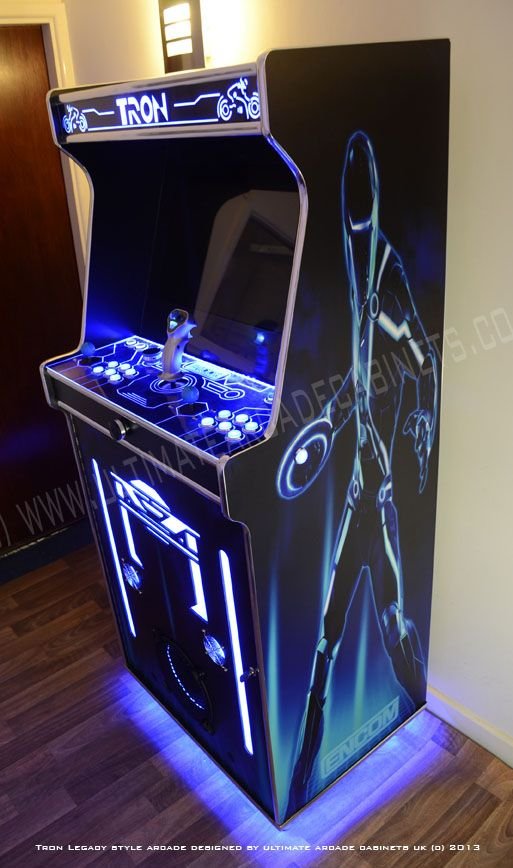
The hum of an arcade, the glow of neon, and the exhilarating whir of a Light Cycle battle – for many, these sensory memories trace back to one groundbreaking title: Tron. More than just a game, the Cultural Impact and Legacy of Tron Arcade transcended its pixelated origins, shaping not only the video game industry but also influencing popular culture, visual aesthetics, and our collective imagination about digital worlds.
What made this particular game, born from a visually ambitious yet commercially lukewarm film, resonate so profoundly? It wasn't just innovative gameplay; it was a potent blend of cutting-edge visuals, a captivating premise, and the sheer audacity of its digital vision.
At a Glance: Tron Arcade's Enduring Influence
- Pioneering Vision: Tron the film was a cinematic first, and the arcade game translated that vision into interactive reality.
- Gameplay Innovation: Introduced distinct mini-games, most notably the iconic Light Cycle, a precursor to many maze and racing games.
- Commercial Success: Despite the film's initial box office struggles, the arcade game was a massive hit, earning critical acclaim and significant revenue.
- Cult Status Catalyst: The game amplified the film's cult following, solidifying its place in pop culture.
- Aesthetic Blueprint: Its distinctive neon-grid aesthetic became a visual language for digital realms across various media.
- Franchise Foundation: Laid the groundwork for a rich multimedia franchise, inspiring sequels, TV shows, and cross-overs for decades.
A World Forged in Pixels: The Origins of Tron's Digital Dream
Before there was an arcade game, there was a film – a daring cinematic experiment that sought to bring the nascent world of computers to the big screen. In the early 1980s, Steven Lisberger, fascinated by the burgeoning video game industry and the promise of computer-generated animation, conceived a story where human users could literally enter a digital realm. This vision became Tron (1982), a Walt Disney Pictures production that, against significant odds, pushed the boundaries of special effects.
Lisberger's original concept began with a simple animated character, a yellow, bearded hero named "Tron," designed to promote his studio. As the film evolved into a live-action spectacle, "Tron" transformed into the distinctive blue-neon-glowing figure we recognize today. The journey to bring this digital world to life was fraught with challenges, as detailed in the groundbreaking production of the original Tron film. Disney, though financing the project, offered limited internal support for the innovative animation techniques required, leading Lisberger to contract external studios like Wang Film Productions to achieve his vision.
The film's plot, centered on former ENCOM programmer Kevin Flynn (played by Jeff Bridges) being digitized into the mainframe by the tyrannical Master Control Program (MCP), was a groundbreaking concept. Forced to participate in deadly games, Flynn teams up with the security program Tron to dismantle the MCP's iron grip. It was a story that, while initially perplexing to some audiences, resonated deeply with a niche of tech enthusiasts and early gamers.
From Silver Screen to Arcade Floor: When Pixels Became Playable
While the Tron film struggled to break even at the box office, it quickly amassed a passionate cult following, particularly within the nascent video game community. It was here that its true commercial potential was unlocked, not in theaters, but in the dimly lit, buzzing halls of the arcade.
Bally Midway, a dominant force in the arcade industry, saw the potential to translate the film's stylized, fictional games into an interactive experience. This was no small feat. The film showcased several distinct "games" – Light Cycles, Disc Wars, Tank Battles, and the Grid bugs. Midway brilliantly decided against trying to emulate the entire cinematic narrative in one go. Instead, they opted for a mini-game format, a practical and innovative approach for the era.
The resulting Tron arcade game featured four distinct mini-games, each named after programming languages, played across twelve progressively difficult levels:
- I/O Tower: Players pilot a Recognizer, navigating a maze to enter the I/O Tower while avoiding Grid bugs.
- MCP Cone: A spinning "concentric grid" where players must destroy sections of the MCP's cone-like core while avoiding its defenses.
- Light Cycle: Undoubtedly the most iconic. Players control a light cycle, leaving a solid light trail behind them, attempting to trap and derez opponent cycles without crashing into their own trail or the arena walls. This segment alone became legendary.
- Battle Tanks: Players navigate a labyrinthine arena in a tank, engaging in combat with enemy tanks and destroying "junction points."
This varied gameplay was a masterclass in adaptation. Midway's Tron arcade cabinet was an immediate sensation. By the end of 1982, it had sold approximately 800 units, generating over $30 million in revenue – a staggering sum for the time. Its commercial triumph was matched by critical acclaim, earning "Coin-Operated Game of the Year" from Electronic Games. This success, ironically, outshone the film's initial theatrical run and cemented Tron's place in popular culture, particularly among gamers.
Want to revisit the thrill of the grid yourself? Explore the Tron arcade game and dive into the mechanics that captivated millions.
The Genesis of an Icon: How Light Cycles Redefined Digital Combat
While all four mini-games in the Tron arcade title were innovative, the Light Cycle segment achieved near-mythic status. It wasn't just a game; it was a phenomenon.
The concept was elegantly simple: two players (or a player against an AI) maneuver futuristic motorcycles that leave an impenetrable trail of light. The goal? Force your opponent to crash into a wall or your light trail, while avoiding your own. This seemingly straightforward premise concealed layers of tactical depth, requiring foresight, quick reflexes, and strategic positioning.
The Light Cycle sequence effectively took the classic "Snake" game concept, elevated its visual fidelity to cinematic levels, and injected it with competitive urgency. It introduced a new paradigm for digital combat and racing, influencing countless games that followed. The visual language of glowing trails and geometric arenas became synonymous with futuristic gameplay. Many players would flock to the Tron machine solely for the chance to play the evolution of Light Cycle gameplay, often leading to intense, competitive tournaments in arcades.
The success of Tron the arcade game directly led to a standalone sequel, Discs of Tron (1983), further expanding the interactive universe and solidifying the franchise's gaming roots. Discs of Tron focused entirely on the disc combat from the film, offering a different but equally challenging experience.
Beyond the Arcade: Tron's Enduring Cultural Resonance
The impact of Tron didn't stay confined to the arcade floor. It rippled outwards, influencing various facets of popular culture and providing a visual blueprint for how we imagined digital spaces for decades to come.
A New Aesthetic for the Digital Age
The film and game introduced a stark, striking aesthetic characterized by:
- Neon Grids: A dark, empty space punctuated by glowing lines forming a grid, symbolizing the underlying structure of a digital world.
- Electrified Programs: Characters and vehicles outlined in brilliant, primary colors, suggesting an internal energy and digital existence.
- Geometric Forms: A preference for clean, sharp geometric shapes in environments, vehicles, and even character designs.
This aesthetic became instantly recognizable and deeply influential. It wasn't just a visual style; it was a philosophical statement about the beauty and danger of the digital frontier. It inspired concept artists, graphic designers, and filmmakers long after its release, becoming a shorthand for "futuristic computer world."
Inspiring a Generation of Game Developers
For young, aspiring game developers in the 80s and beyond, Tron was a revelation. It showed what was possible when visual storytelling and interactive mechanics converged. It suggested that games could be more than simple high-score chases; they could be portals to entirely new realities.
- World-Building: Tron was one of the earliest examples of a fully realized digital world, inspiring games to consider their own "metaverse" or virtual spaces.
- Gameplay Concepts: Beyond Light Cycles, the idea of users "entering" a computer, battling programs, and wielding digital weapons became a recurring trope in gaming.
- Visual Fidelity: While crude by today's standards, Tron's graphics were groundbreaking for its time, pushing developers to think about how visual presentation could enhance immersion.
A Cult Classic for the Ages
Despite its initial commercial underperformance, Tron never faded. It brewed in the background, a beloved artifact for those who saw its true genius. Its themes of corporate espionage, digital sentience, and the blurring lines between humanity and technology only became more relevant with the rise of the internet and increasingly sophisticated digital systems.
The film's exploration of digital identity, user control, and artificial intelligence were prescient, resonating with audiences in ways the mainstream initially missed. The arcade game, by giving players a direct, visceral connection to this digital world, significantly fueled this cult following, proving that Tron was a universe worth exploring.
The Legacy Continues: Sequels and Modern Iterations
The enduring fascination with Tron's world proved irresistible, leading to various attempts to revisit and expand its universe.
Video Game Explorations: Tron 2.0 (2003)
Decades after the original film and arcade game, Tron 2.0 emerged as a first-person shooter game. Developed by Monolith Productions, it served as a spiritual successor, exploring sequel concepts and introducing new characters and technologies within the Grid. While it didn't achieve the widespread fame of its predecessors, it demonstrated a persistent audience appetite for new Tron stories and further fleshed out the lore of the digital world.
The Return to the Big Screen: Tron: Legacy (2010)
The whispers of a true film sequel finally materialized with Tron: Legacy in 2010. Produced by original creator Steven Lisberger and directed by Joseph Kosinski, the film aimed to honor the original while expanding the universe for a new generation.
Tron: Legacy brought back iconic elements like redesigned Light Cycles, dazzling disc games, and, crucially, Jeff Bridges reprising his role as Kevin Flynn, alongside a digitally de-aged version, Clu. The film picks up Flynn's story after his mysterious disappearance in 1989, with his son, Sam Flynn, investigating a message from his father's old arcade. This leads Sam into the Grid, a world now ruled by Clu, a corrupt program resembling a younger Kevin, who betrayed his father and the original Tron.
The film was a visual spectacle, pushing boundaries in CGI and featuring a memorable soundtrack by Daft Punk. It delved deeper into the mythology of the Grid, exploring themes of creation, perfection, and the consequences of unchecked AI. While its narrative received mixed reviews, its visual impact and the sheer joy of seeing the Tron universe brought to life with modern technology captivated audiences. The complex narrative themes explored in the narrative themes explored in Tron: Legacy resonated with a fan base hungry for more.
Expanding the Universe: Tron: Uprising and Beyond
The Tron universe continued its expansion into other media:
- Tron: Uprising (2012): An animated series on Disney XD, Uprising was critically acclaimed for its sophisticated animation style, mature storytelling, and excellent voice acting. Set between the events of Tron and Tron: Legacy, it explored the early days of Clu's oppressive rule and the formation of a rebellion led by a program named Beck, mentored by Tron himself. The series developed the detailed lore of the Tron: Uprising series significantly before its unfortunate cancellation after 19 episodes.
- Future Projects: Discussions about a third Tron movie, potentially starring Jared Leto, have circulated for years, indicating ongoing studio interest, even if concrete plans remain elusive. A live-action Disney+ series was also considered, though it is currently shelved.
- Cross-Promotional Appearances: The enduring appeal of Tron is evident in its appearances in major cross-promotional projects, including its own world in the Kingdom Hearts video game series and character skins/items in Fortnite, introducing the Grid's aesthetic to entirely new generations of players. These collaborations highlight the ongoing discussions around the franchise's future and its undeniable appeal.
The Unseen Hand: How Tron Shaped Our Digital Imaginations
The cultural impact of Tron goes deeper than just its games and films. It provided a visual vocabulary for the internet age before the internet as we know it even existed.
- Predicting Virtual Reality: Tron was a fantastical precursor to virtual reality. The idea of donning a suit and being "uploaded" into a computer program, directly interacting with data, laid conceptual groundwork long before VR headsets became a reality.
- The Digital Self: The film's premise forced viewers to consider what it meant to exist digitally, a question that has become increasingly pertinent in an age of online avatars, social media profiles, and virtual identities.
- Cyberpunk Roots: While not strictly cyberpunk, Tron's depiction of powerful corporations, digital surveillance (the MCP), and heroic hackers battling within a digital realm influenced the nascent cyberpunk genre in literature, film, and games.
- The Allure of the Grid: The clean, stark beauty of the Grid, with its glowing lines and vast emptiness, became an aspirational vision for digital environments, representing both freedom and confinement.
Tron wasn't just a story about computers; it was a story from the computer age, reflecting anxieties and hopes about technology's future. It dared to imagine a world inside the machine, populated by beings of pure data, and invited us to step inside.
Addressing Common Questions About Tron's Legacy
Q: Was the original Tron film a commercial success?
A: No, not initially. While it earned critical praise for its visuals, Tron underperformed at the box office, struggling to recoup its budget. Its commercial success came largely through its tie-in arcade game and subsequent home video releases, which cultivated its cult following.
Q: Why is the Light Cycle game so famous?
A: The Light Cycle game was incredibly innovative for its time, translating a cinematic concept into a highly addictive and competitive interactive experience. Its simple-to-understand rules, combined with the visual spectacle of glowing trails, made it an instant classic and a major influence on maze and racing games.
Q: Did the arcade game accurately portray the film's events?
A: Not directly. Instead of a narrative-driven game, Bally Midway's Tron arcade adopted a mini-game format, extracting the most engaging "games" from the film (Light Cycles, Disc Wars, Tank Battles, I/O Tower navigation) and presenting them as standalone challenges. This made it more suitable for arcade play.
Q: Is there going to be a Tron 3?
A: Discussions and rumors about a third Tron film have been ongoing for many years. While various creative teams and actors (like Jared Leto) have been attached, the project has faced delays and reconfigurations. As of now, a concrete, actively-in-production Tron 3 has not been officially greenlit, but fan interest remains high.
The Enduring Glow of the Grid
Decades have passed since the first Tron film flickered onto screens and its arcade counterpart buzzed with activity, yet its influence remains undiminished. From the iconic Light Cycle battles to the stark beauty of the digital Grid, Tron captured an imagination that continues to shape our understanding of virtual worlds.
It was more than just entertainment; it was a prophecy, a visual manifesto for a digital future that was only just beginning to take shape. The Cultural Impact and Legacy of Tron Arcade is not merely a footnote in gaming history; it's a foundational chapter, a testament to the power of vision, innovation, and the undeniable allure of worlds crafted in pixels and light. The Grid lives on, not just in our memories, but in the countless digital landscapes it inspired, continuing to beckon us to "enter the system."