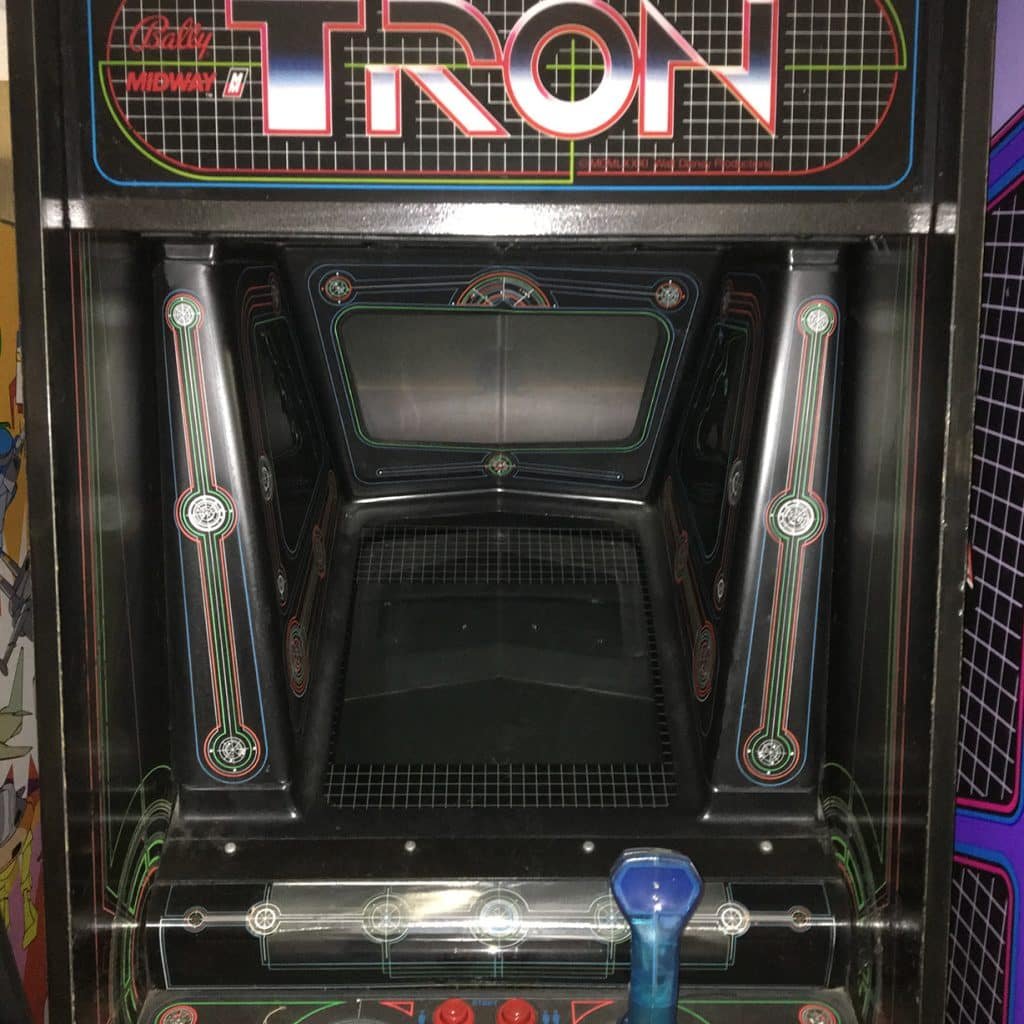
Imagine striking gold, not in a dusty mine, but by the side of a Chicago road. That's precisely what happened to game collector and historian Lapetino, who discovered an original "Discs of Tron" arcade machine among discarded refuse. This wasn't just any old cabinet; it was a "holy grail" of retro gaming, a colossal 700-pound behemoth designed for an immersive, stand-inside experience. Found in remarkably good working order despite its 40 years, Lapetino's find underscores the thrill, challenge, and sheer rarity of Finding and Experiencing Original Tron Arcade Machines.
For many, the Tron arcade game isn't just a collection of pixels and circuits; it's a portal to a bygone era of digital wonder. It's the hum of the CRT, the unique feel of the controls, and the communal buzz of an arcade, all wrapped in a distinctive cyber-futuristic aesthetic. Owning and playing an original Tron machine today isn't merely a hobby; it's an act of preservation, a tribute to gaming history, and an unparalleled personal experience.
At a Glance: Your Quest for Grid Glory
- Rarity is Real: Original Tron and especially "Discs of Tron" machines are scarce, with fewer than 3,000 "Discs of Tron" units ever produced.
- Weighty Investment: Prepare for significant bulk. A "Discs of Tron" cabinet weighs 700 pounds—far heavier than typical arcade games.
- Condition is King: Pristine, original machines fetch premium prices, potentially $10,000 or more for rare finds like the "Discs of Tron."
- The Hunt is Part of the Fun: Online forums, specialized dealers, and even estate sales are your best bets, though miraculous roadside finds do happen.
- Preservation Matters: These machines are cultural artifacts. Don't discard old hardware; seek to sell or donate for preservation.
- Beyond the Price Tag: Factor in shipping, restoration, and ongoing maintenance when budgeting for your Tron adventure.
Why Tron? The Enduring Legacy of a Digital Pioneer
The original Tron arcade game, released by Bally Midway in 1982, was more than just a tie-in to the groundbreaking Disney film. It was an innovative, multi-game experience packed into a single cabinet, featuring distinct levels like the Light Cycle grid, the Tank fight, and the MCP Cone. Its unique illuminated joystick and spinner controls were iconic, pulling players into its neon-lit digital world. To truly Explore the classic Tron arcade, you have to appreciate the technological ambition behind it.
Then came "Discs of Tron" in 1983, a standalone sequel that intensified the one-on-one combat experience from the film's disc-throwing arena. This machine, in particular, is what collectors call a "holy grail." Its scarcity is legendary—fewer than 3,000 were made, a testament to its complexity and the sheer size of its unique, immersive cabinet. Players stepped inside the machine, surrounded by the game, a physical experience few other arcade titles offered. This immersive design, coupled with an optical joystick for precise disc throwing, set it apart. It’s this combination of cinematic connection, gameplay innovation, and physical presence that makes the pursuit of an original Tron machine so compelling for enthusiasts.
Hunting the Holy Grail: Where Original Tron Machines Hide
Finding an original Tron or "Discs of Tron" machine isn't like picking up a common classic. These are rare artifacts, often cherished by their owners or tucked away in forgotten corners. Your search will require patience, persistence, and a bit of luck.
The Digital Dives and Specialty Dealers
Your first stop should be the internet, but not just mainstream marketplaces. While eBay can sometimes surprise you with a listing, the real treasures are often found in:
- Specialized Arcade Forums & Communities: Websites like KLOV (Killer List of Videogames) or dedicated arcade enthusiast forums are hubs for collectors buying, selling, and trading machines. These communities often have "for sale" sections where you can find leads, advice, and even pre-vetted machines.
- Dedicated Arcade Retailers/Restorers: A handful of businesses specialize in sourcing, restoring, and selling vintage arcade games. They might have a waiting list, but their machines are often meticulously restored and come with some level of support. A quick search for "vintage arcade sales" or "arcade restoration companies" in your region can yield results.
- Social Media Groups: Facebook groups dedicated to arcade collecting, retro gaming, or even local "buy/sell/trade" groups can sometimes unearth unexpected finds.
- Online Auction Houses: Keep an eye on auction sites that deal in collectibles or even industrial equipment. Sometimes, arcade games surface from liquidations or estate sales.
- General Classifieds (with caution): Local online classifieds (like Craigslist or Facebook Marketplace) can occasionally have a diamond in the rough. Just be prepared to vet sellers thoroughly and inspect machines carefully, as these platforms have fewer safeguards.
Lapetino's amazing discovery—a "Discs of Tron" machine put out with the garbage—highlights that unexpected opportunities can arise. However, relying on such a stroke of luck isn't a strategy; it's an outlier. For most, the hunt is a proactive, networked effort. If you're looking to dive deeper into understanding the vintage gaming market, these resources are invaluable.
What to Look For: Identifying an Authentic Tron Cabinet
Spotting a genuine Tron arcade machine, especially differentiating between the original and the rarer "Discs of Tron," requires a keen eye. You're looking for authenticity in the cabinet, artwork, controls, and internal components.
The Original Tron (1982)
- Cabinet Design: Features a distinct rectangular shape, often with side art depicting characters from the movie.
- Control Panel: Look for the signature illuminated joystick (with a trigger button), a spinning dial for movement (the spinner), and two square action buttons. The control panel artwork is crucial.
- Marquee & Bezel: The backlit marquee (top banner) and the bezel (area around the monitor) should feature original Tron branding and art.
- Internals: Runs on a Bally/Midway MCR (Midway's Custom Resources) hardware system. Inspect the PCB (Printed Circuit Board) for original Midway markings.
The Discs of Tron (1983)
This is the truly distinctive one, the 700-pound beast:
- Cabinet Design: Significantly larger, designed for the player to stand inside a recessed area, creating an immersive "environment." The cabinet often has a more angular, architectural look than the original Tron.
- Control Panel: Features a unique optical joystick for movement (often without a trigger), and two large, flat buttons for throwing discs. The layout is central and imposing.
- Marquee & Side Art: Distinct "Discs of Tron" branding and character artwork, often more detailed due to the larger cabinet size.
- Weight: As mentioned, 700 pounds. If it feels light, it's not a "Discs of Tron."
- Internals: Also uses Bally/Midway MCR III hardware. Verification of the original PCB is key.
General Authenticity Checks
- Original Artwork: Fading is common, but look for original screen-printed artwork versus cheap reproductions. Check for original serial number tags, often found on the back or bottom of the cabinet.
- Monitor: Ideally, an original CRT (Cathode Ray Tube) monitor will be present. Swapped LCDs or modern screens significantly reduce value and authenticity.
- Condition: Assess the overall condition: wood rot, water damage, severe scratches on the cabinet, control panel wear, and monitor burn-in. Lapetino's find, despite missing a back glass panel, was in "great working condition with all original components," which is exceptionally rare.
- Working Condition: Does it power on? Does it play correctly? Are all controls responsive? A non-working machine will require more investment in retro arcade restoration.
- Documentation: Original manuals, schematics, or even receipts add value and confirm authenticity.
To delve into the history of the Tron game and its various iterations can further equip you to identify these machines correctly.
The Price of Immersion: Budgeting for a Digital Relic
The cost of an original Tron arcade machine varies wildly based on several factors, with the "Discs of Tron" being at the pinnacle of rarity and price.
Factors Influencing Cost
- Rarity: "Discs of Tron" is significantly rarer than the original Tron, commanding higher prices. Fewer than 3,000 units means demand far outstrips supply.
- Condition: A fully working, cosmetically excellent machine with original components will fetch top dollar. Machines needing extensive restoration will be cheaper upfront but more expensive in the long run.
- Originality: "All original components" is the gold standard. Aftermarket parts, modern monitor swaps, or extensive cabinet repairs can decrease value.
- Location: Proximity to the seller can reduce shipping costs, which are substantial for a machine of this size and weight.
- Seller: Private sales might be more negotiable than specialized dealers who offer warranties and restoration services.
Price Ranges (Estimates)
- Original Tron (1982):
- Non-working/Rough: $500 - $1,500 (project machine)
- Working/Fair Condition: $1,500 - $4,000
- Fully Restored/Excellent: $4,000 - $8,000+
- Discs of Tron (1983):
- Non-working/Rough: $2,000 - $4,000 (serious project)
- Working/Fair Condition: $4,000 - $8,000
- Fully Restored/Excellent: $8,000 - $15,000+ (Lapetino's find, once restored, could easily fetch prices in the upper range, with similar models fetching "as high as $10,000" in its found state).
Beyond the Sticker Price: Hidden Costs
- Shipping & Logistics: This is a major factor, especially for the 700-pound "Discs of Tron." Professional freight services are often necessary. Expect hundreds, potentially over a thousand dollars, depending on distance and services needed (e.g., liftgate delivery).
- Restoration: Unless you're buying a fully restored machine, budget for parts (monitor, PCB repair, control panel components, artwork), tools, and potentially professional labor.
- Maintenance: Even a working machine will require occasional maintenance—dusting, capacitor replacement, monitor adjustments, etc.
- Space: These machines are large. Ensure you have dedicated space and power for it.
Before making a significant purchase, it's wise to consult our comprehensive arcade machine buying guide for detailed advice on evaluating machines and budgeting effectively.
The Journey Home: Logistics of a 700-Pound Pixel Dream
So, you've found your Tron machine. Now comes the challenge of getting it home. This isn't a package you toss in the back seat. This is a heavy, delicate piece of electronics that requires careful planning.
Assessing the Load
- Weight: Reiterate the "Discs of Tron" weighs 700 pounds. The original Tron is lighter, but still around 200-300 pounds. This isn't a one-person job.
- Dimensions: Measure the machine precisely (height, width, depth). Then, measure all doorways, hallways, and stairs it will need to pass through at both the pick-up and drop-off locations. Remember to account for the monitor's protrusion on the back, or any top marquee.
- Access: Is there a ramp, loading dock, or easy ground-level access? Or are there multiple flights of stairs? This significantly impacts logistics and cost.
Moving Options
- Professional Freight/Moving Companies:
- White Glove Service: This is the most expensive but safest option. They specialize in moving delicate, heavy items, often including inside delivery.
- LTL (Less Than Truckload) Freight: A more economical option if you're comfortable with some DIY at either end. You'll need to palletize and shrink-wrap the machine yourself, or pay a crating service. You'll also need a plan for getting it off the truck (liftgate service is crucial) and into your home.
- Specialized Arcade Movers: Some companies specifically move arcade machines, offering expertise in handling these unique items.
- DIY (for the brave and prepared):
- Equipment: You'll need an appliance dolly with straps (rated for the weight), moving blankets, ratchet straps, a truck or trailer with a ramp (or liftgate access), and at least 2-3 strong helpers.
- Disassembly: For "Discs of Tron," you might need to partially disassemble it (e.g., remove the marquee, control panel) to navigate tight spaces or reduce weight, if possible. Always consult a service manual before attempting this.
- Protection: Wrap the machine heavily in moving blankets to protect the artwork and cabinet from scratches and dings. Secure everything tightly.
- Insurance: Consider separate moving insurance, as your homeowner's or auto insurance might not cover damage to a high-value collectible during transit.
Critical Considerations
- Climate Control: Extreme temperature changes during transit can stress electronic components. Transport in an enclosed vehicle if possible, especially over long distances.
- Upright Position: Arcade machines are generally designed to be moved upright. Laying them on their back or side can damage internal components, particularly the monitor.
- Safety First: Moving a 700-pound machine is dangerous. Prioritize safety for yourself and your helpers. Don't cut corners.
Restoration vs. Preservation: A Delicate Balance
The Lapetino find perfectly illustrates a critical debate in the retro gaming community: how to approach machines that have survived decades. Is it better to restore them to "like new" condition, or preserve their original state, imperfections and all?
The Preservation Ethos
- As Found: Many collectors, especially historians, advocate for preserving machines "as found" if they are in working order or can be made so with minimal intervention. Lapetino's "Discs of Tron" needed only a back glass panel and cleaning, making it an ideal candidate for preservation. This retains the machine's unique history and patina.
- Originality: Keeping original parts (monitor, PCB, control panel components, artwork) intact is paramount for preservation. This is where a machine's true value lies—its historical accuracy. Replacing parts with modern equivalents, while making the machine playable, often diminishes its collectible value.
- Documentation: For preservationists, documenting a machine's condition and history is as important as the machine itself. This includes photographs, repair logs, and any provenance.
- The "90 Percent Lost" Statistic: Studies suggesting nearly 90 percent of classic video games are lost underscore the importance of preserving classic video games in their original hardware form. Owners of outdated gaming hardware are urged not to discard them but to sell or donate them to help ensure these pieces of history don't vanish.
The Restoration Approach
- Bringing Back to Life: For machines in poor cosmetic or functional condition, restoration can be a valid path. This involves repairing cabinet damage, refreshing artwork, replacing worn controls, and often overhauling the electronics.
- Reproduction Parts: Sometimes, original parts are unobtainable. Reproduction artwork, control panel overlays, and even some electronic components are available. While not "original," they can make a non-playable or unsightly machine functional and attractive again.
- Professional Expertise: Restoration is a specialized skill. If you lack the expertise, consider hiring a reputable arcade restorer. Ask for references, see examples of their work, and get detailed quotes.
- Value vs. Enjoyment: A fully restored machine, while perhaps not as "original" as a perfectly preserved one, can offer immense personal enjoyment and still hold significant value, especially if done professionally and accurately.
The best approach often depends on the machine's initial condition, your personal goals, and your budget. A rare "holy grail" like "Discs of Tron" leans heavily towards preservation when possible, but a common classic with severe damage might be a perfect candidate for a full restoration.
Experiencing Tron: More Than Just Playing a Game
Once you've navigated the hunt, the purchase, and the perilous journey home, the true reward begins: experiencing Tron. This isn't just about pressing buttons; it's about connecting with a piece of cultural history.
The Tactile and Visual Feast
- Authenticity: The glow of the original CRT monitor, the specific click of the joystick, the spin of the dial, the weight of the buttons—these are sensations that no emulator or modern port can replicate. You are interacting with the game exactly as players did 40 years ago.
- Immersion: For "Discs of Tron," stepping into that cabinet transports you directly into the digital arena. The sound, the light, the sheer scale of the machine—it's an all-encompassing experience.
- Nostalgia: For those who remember arcades, playing Tron on its original hardware is a powerful nostalgic trip, rekindling memories of youth, simpler times, and the pure joy of discovery.
Maintaining Your Digital Artifact
Owning an original Tron machine also means becoming its caretaker. Regular maintenance is key to longevity:
- Cleanliness: Keep the cabinet and control panel clean to prevent dust and grime buildup. Use appropriate cleaners for different surfaces.
- Environment: Store the machine in a climate-controlled environment, away from direct sunlight, extreme temperatures, and humidity, which can damage wood, artwork, and electronics.
- Power: Use a surge protector to guard against power fluctuations.
- Periodic Check-ups: Learn basic troubleshooting. Periodically check internal connections, clean fan filters, and inspect for any signs of wear or impending failure (e.g., dim monitor, flickering lights).
- Community Support: The retro arcade community is a wealth of knowledge. Join forums, ask questions, and share your experiences. Many collectors are happy to offer advice on common issues.
Common Questions from Aspiring Gridizens
Can I play Tron on modern systems?
Yes, you can play Tron through emulation (e.g., MAME on PC) or via various ports on modern consoles. However, while these options capture the gameplay, they fundamentally lack the authentic experience of the original hardware—the controls, the unique cabinet, the CRT monitor, and the historical context. It's like viewing a high-resolution photo of a classic car versus driving the actual vehicle.
Are all Tron arcade machines the same?
No. There's the original "Tron" (1982), which is a multi-game cabinet based on the film, and the standalone "Discs of Tron" (1983), which focuses solely on the disc-throwing segment and features a much larger, immersive cabinet design. They are distinct machines with different values and play experiences.
Is an original Tron machine a good investment?
Like many collectibles, the "investment" aspect is complex. Rarer machines in excellent condition (especially "Discs of Tron") have shown significant appreciation in value. However, the market can fluctuate, and restoration/maintenance costs can be high. For most, the primary "return" is personal enjoyment and the satisfaction of owning a piece of history, rather than purely financial gain. Buy it because you love it, not just to flip it.
What if I can't find an original or can't afford it?
Don't despair!
- Reproduction Cabinets: Some companies build modern reproductions that house emulation hardware, offering a similar look and feel.
- MAME Cabinets: Build your own arcade cabinet and load it with emulators. You can customize it to look like Tron.
- Visit Arcades: Seek out "barcades" or dedicated classic arcades that might have a working Tron machine available for public play. This offers an authentic experience without the ownership burden.
- Mini Arcade Machines: Many companies now produce smaller, tabletop, or scaled-down versions of classic arcades, including Tron.
Your Next Sector: Embarking on Your Own Tron Adventure
The quest for an original Tron arcade machine is a rewarding journey, whether you're a seasoned collector or a burgeoning enthusiast. It’s a hunt for a tangible piece of history, a physical connection to the roots of video gaming. Start by immersing yourself in the community—read forums, watch videos, and learn everything you can. Network with collectors and restorers. Be patient; the right machine might not appear overnight, but when it does, it's worth the wait.
Remember the story of Lapetino's amazing roadside discovery, not as a guarantee, but as inspiration. It’s a powerful reminder that these machines, though old, are valuable artifacts, and their continued existence depends on enthusiasts like you. By taking on the challenge of Finding and Experiencing Original Tron Arcade Machines, you’re not just acquiring a game; you’re becoming a guardian of digital history, ensuring that future generations can also step into the Grid and experience its rare thrills firsthand.