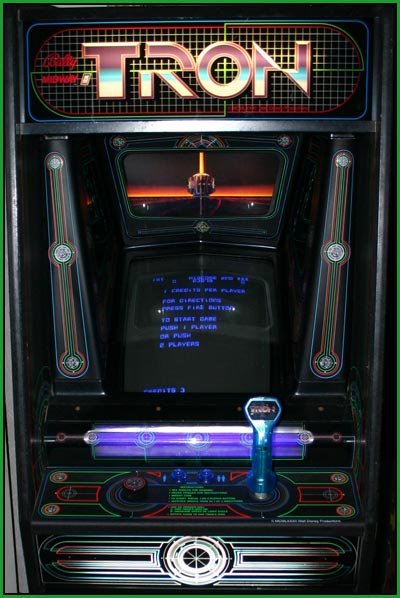
Step into the glowing digital world of the Grid, where programs fight for freedom against a tyrannical Master Control Program (MCP). For those of us who grew up pumping quarters into arcade machines, TRON wasn't just a movie; it was a groundbreaking video game that fused immersive visuals with four distinct, challenging mini-games. Mastering Tron Arcade Gameplay Mechanics and Strategy requires more than quick reflexes; it demands an understanding of each game's unique rules and a strategic mind to outwit the MCP's digital defenses.
Forget simply surviving. This guide isn't about getting by; it's about pushing for high scores, understanding the subtle nuances, and truly dominating every challenge the Grid throws at you. You're about to become a User worthy of the name.
At a Glance: Key Takeaways for Tron Dominance
- Four Games, One Goal: TRON comprises four distinct mini-games – Light Cycles, Battle Tanks, I/O Tower, and MCP Cone – all leading to the ultimate objective: disrupting the MCP.
- Learn Each Game Individually: Success hinges on understanding the unique mechanics, enemy behaviors, and scoring opportunities within each of the four challenges.
- Prioritize Survival: While scoring is crucial, preserving your lives is paramount. A single lost life can unravel your entire run.
- Pattern Recognition is Key: Enemies often follow predictable patterns. Observing and exploiting these patterns is fundamental to strategy.
- Master the Controls: Responsive joystick movement and precise firing are critical across all stages. Practice makes perfect.
- Patience and Precision: Rushing often leads to mistakes. Strategic, deliberate actions will serve you better than frantic button mashing.
A Legacy Forged in Light: Understanding Tron's Arcade Origins
In 1982, Disney’s ambitious film TRON captivated audiences with its revolutionary computer-generated imagery. Hot on its heels, Bally Midway released an arcade game that wasn't just a movie tie-in; it was a phenomenon in its own right, often surpassing the film's initial reception. The game puts you, the player, directly in the role of Tron, armed with his trusty throwing disc, fighting to liberate programs from the MCP's iron grip.
Unlike many single-concept arcade titles, TRON offered a dynamic experience, cycling through four distinct challenges that mirrored key scenes from the movie. This multi-game structure demanded versatility, pushing players to adapt their strategies on the fly. It was a true testament to Midway's ingenuity and a cornerstone of Midway's lasting arcade legacy. The game’s complexity was so ahead of its time that it was never truly converted for home systems in its entirety, making the arcade original a unique and coveted experience. If you’re looking to truly Explore the Tron arcade game, understanding its roots is the first step.
Your mission, should you choose to accept it, is to guide Tron through the deadly Light Cycles, engage in tactical warfare in Battle Tanks, navigate the treacherous I/O Tower, and finally breach the formidable MCP Cone. Each victory brings you closer to freeing the Grid.
The Grid's Deadliest Race: Light Cycles Mechanics & Strategy
The Light Cycles stage is arguably the most iconic component of the TRON arcade game, synonymous with the movie itself. Here, you control a high-speed vehicle that leaves a solid, impassable wall of light behind it. Your objective: force enemy light cycles to crash into your wall or the boundaries of the arena, while meticulously avoiding their trails and your own.
Core Mechanics of Light Cycles
- Movement: Your Light Cycle moves at a constant, high speed. You control its direction with the joystick (up, down, left, right). Unlike many games, you cannot stop or slow down.
- Light Trails: Every move creates a solid light trail. These trails are permanent for the duration of the round and lethal to any cycle that touches them.
- Arena: The battle takes place on a square grid. The walls of the arena are also fatal if touched.
- Opponents: You face one to three enemy Light Cycles, each with its own color. They are driven by the MCP and will actively try to trap you.
- Scoring: Eliminating an opponent earns you points. The last cycle remaining wins the round.
Dominating the Grid: Light Cycle Strategies
- The Art of the Trap: Your primary goal isn't just to survive, but to box in your opponents.
- The "L" Trap: A classic move. Draw a long line, then turn sharply to create the corner of an "L." If an opponent follows too closely, you can often turn again to complete the trap.
- Cornering: Use the edges and corners of the arena to your advantage. By forcing opponents into a corner, you limit their escape routes.
- "Cut Off" Maneuvers: Anticipate an opponent's path and cut across it, leaving a trail they must react to. This is especially effective if they are heading towards a dead end.
- Self-Preservation First:
- Always Have an Escape Route: Never paint yourself into a corner. Always be thinking one or two moves ahead, ensuring you have clear space to turn.
- Watch Your Own Tail: It's surprisingly easy to crash into a line you just laid down, especially during tight turns. Give yourself room.
- Observe Enemy Patterns: AI opponents aren't always random. Sometimes they'll follow predictable paths. Learning these can help you anticipate their traps and set your own.
- Strategic Movement:
- Expand Your Territory: In the early stages of a round, try to spread out and create a larger open area for yourself. This gives you more room to maneuver when things get tight.
- Controlled Aggression: Don't be afraid to make aggressive moves, but ensure they are calculated. A well-timed sharp turn can trap an opponent, but a poorly timed one can trap you.
- Prioritize Targets (Multiple Opponents): If facing multiple cycles, try to isolate and eliminate one quickly to reduce the chaos. Don't let yourself get surrounded.
- Mastering Tight Turns: This is where the game gets difficult.
- Practice Short Bursts: Rapidly changing direction is crucial. Practice making quick, consecutive 90-degree turns without hitting your own trail.
- Wall Hugging: Sometimes, the safest path is to hug the outer walls. This reduces the number of directions you need to worry about and can funnel opponents towards your traps.
The Light Cycles stage evolves as you progress through the game's levels, with faster cycles and more complex AI. Adaptability is key. Keep in mind that the influence of this particular game mode extended far beyond the arcade, shaping the evolution of Light Cycle games across decades of gaming.
Tank Warfare on the Grid: Battle Tanks Mechanics & Strategy
After the swift precision of Light Cycles, Battle Tanks throws you into a more direct combat scenario. You control a tank in a maze-like arena, tasked with destroying a squad of enemy tanks while navigating treacherous minefields and enemy fire.
Core Mechanics of Battle Tanks
- Movement: Your tank moves with the joystick, allowing for full 360-degree control. You can stop, reverse, and turn on a dime.
- Firing: You fire your cannon with a button, launching projectiles across the arena. Shots are straight and can be blocked by walls.
- Enemies: You face multiple enemy tanks, which come in different colors (indicating difficulty/behavior). They will actively pursue you and fire.
- Minefield: The arena is crisscrossed with static, glowing mines. Touching these is fatal.
- Walls: The arena is a labyrinth of solid walls, which can be used for cover or to trap yourself.
- Scoring: Destroying enemy tanks earns points. Clearing the wave advances you.
Tactical Engagement: Battle Tank Strategies
- Prioritize Movement & Cover:
- Never Stay Still: Standing still makes you an easy target. Always be moving, even if it's just subtle jukes.
- Use Walls to Your Advantage: Walls are your best friend. They block enemy shots and can be used to set up ambushes. Never advance into an open area without a clear escape or cover plan.
- The "Peek-a-Boo" Tactic: Hide behind a corner, wait for an enemy to come into view, fire, and immediately retreat. This minimizes your exposure.
- Aggressive Offense, Smart Defense:
- Target Prioritization: Some enemy tanks are more aggressive or have faster projectiles. Learn to identify and prioritize the most dangerous threats.
- Anticipate Enemy Movement: Enemy tanks often move in predictable patterns along the maze paths. Anticipate where they will emerge from behind a wall.
- Aim for Open Shots: Don't waste shots on enemies behind solid walls. Wait for clear lines of fire.
- Corner Traps: Lure enemies around corners where you can get a quick, decisive shot as they appear.
- Navigating the Minefield:
- Situational Awareness: Always be aware of the mines. They are often placed in choke points or paths that enemies might force you into.
- Deliberate Pathing: Plan your route through the minefield carefully. Sometimes taking a slightly longer path around mines is safer than trying to weave through them under fire.
- Don't Get Cornered by Mines: Be mindful of paths that lead to dead ends filled with mines, especially when pursued by multiple tanks.
- Advanced Maneuvers:
- Crossfire Avoidance: When multiple enemy tanks are active, try to position yourself so that you only engage one at a time, or so that their shots don't converge on your position.
- Flanking: If an enemy is stationary or focused on another direction, try to circle around for a flanking shot.
- Baiting: Sometimes, intentionally exposing yourself for a brief moment can draw an enemy out of cover, allowing you to quickly shoot them.
As levels progress, the minefields become denser, and enemy tanks become more numerous and intelligent. Adapt your tactics to the increasing difficulty, always prioritizing evasion and smart shooting.
Sending the Message: I/O Tower Mechanics & Strategy
The I/O Tower stage shifts gears again, presenting a vertically scrolling challenge where you must blast your way through multiplying "Grid Bugs" to reach the tower's core and send a message. This is where precision and crowd control become paramount.
Core Mechanics of the I/O Tower
- Movement: You control Tron's character, moving him left and right at the bottom of the screen.
- Firing: You fire Tron's disc upwards. The disc travels in a straight line to the top of the screen unless it hits an enemy or a barrier.
- Grid Bugs: These are the primary enemies. They start as large bugs, but when hit, they split into two smaller bugs. These smaller bugs, when hit again, split into two even smaller bugs (the smallest size). The smallest bugs are destroyed when hit.
- I/O Tower Structure: The tower is a series of platforms and barriers. You must clear a path through Grid Bugs to ascend.
- Message Core: Your ultimate goal is to destroy the core at the top of the tower, which becomes accessible once enough Grid Bugs are cleared.
- Scoring: Points are awarded for destroying Grid Bugs, with smaller bugs yielding more points.
Clearing the Path: I/O Tower Strategies
- Prioritize "De-multiplying" Grid Bugs:
- Focus on the Largest: Whenever possible, hit the largest Grid Bugs first. Each shot will multiply them, so reducing their size early is crucial.
- Targeted Shots: Don't just fire randomly. Aim for bugs that are in clear lines of fire and pose the most immediate threat.
- Control the "Swarm": Your main challenge is preventing the screen from becoming overwhelmed with tiny, fast-moving bugs. Shoot quickly to destroy the smallest bugs before they become too numerous.
- Strategic Movement & Positioning:
- Stay Centered (Initially): Often, starting near the center gives you the most flexibility to move left or right to intercept bugs coming down.
- Anticipate Descents: Grid Bugs move downwards. Anticipate their trajectories and position Tron to intercept them as they fall.
- Avoid Contact: Touching a Grid Bug, regardless of size, means a lost life. Maintain a safe distance.
- Left/Right "Sweeps": Sometimes, moving consistently from one side of the screen to the other while firing can help clear out broad sections of falling bugs.
- Understanding the Tower's Layout:
- Barriers: The I/O Tower has solid barriers. Your disc cannot pass through these. Use them to your advantage by positioning yourself for shots that clear out bugs above the barrier, while bugs below fall harmlessly past.
- Opening the Core: The core isn't immediately vulnerable. You must clear a certain number of Grid Bugs (often indicated by a progress bar or visual cues) before you can hit it. Don't waste shots on the core before it's open.
- Advanced Tactics:
- The "Narrow Lane" Clear: If you can create a narrow, bug-free lane, use it to quickly ascend to clear bugs higher up, then move back down to deal with those that multiplied below.
- Rhythm Firing: Some players develop a rhythm of firing that allows for continuous suppression of Grid Bugs, preventing them from accumulating.
- Patience for Power-Ups (if applicable): While the original TRON arcade game doesn't feature traditional power-ups, later iterations or specific ports might. Always be aware of any temporary advantages.
The I/O Tower can feel chaotic, but with focused firing and smart movement, you can systematically dismantle the Grid Bugs and send your vital message to the outside world.
Breaching the Citadel: MCP Cone Mechanics & Strategy
The final challenge, the MCP Cone, is a direct assault on the Master Control Program itself. This stage is a test of timing, precision, and quick decision-making as you attempt to insert the disruptive program into the MCP's core, all while its defenses rotate and regenerate.
Core Mechanics of the MCP Cone
- Movement: You control Tron's character at the bottom of the screen, moving left and right.
- Firing: You fire your disc upwards towards the rotating MCP Cone.
- MCP Cone Structure: The MCP Cone is a multi-layered, pyramid-like structure that rotates. Each layer has specific segments that are either solid "defense blocks" or open "entry points."
- Objective: You need to fire your disc through the open entry points of all layers to reach the central core of the MCP.
- Defense Blocks: These solid segments block your disc. If your disc hits a defense block, it bounces back down to you.
- Regeneration: After successfully hitting a layer, the MCP will rotate and potentially regenerate defense blocks, making the path harder.
- Enemy Discs: The MCP will fire its own deadly discs downwards, which you must dodge.
- Scoring: Points are awarded for successfully hitting each layer of the MCP Cone and for destroying the core.
Deciphering the MCP's Defenses: MCP Cone Strategies
- Timing is Everything:
- Observe Rotation Patterns: The MCP Cone rotates at a consistent speed. Learn its rhythm. You need to fire your disc precisely when all open segments align.
- Anticipate Openings: Look for the "sweet spot" where a clear path to the core is about to align. Don't just react; anticipate.
- Short, Deliberate Shots: While rapid firing can sometimes work, deliberate, well-timed shots are far more effective here. A wasted shot means waiting for your disc to return and new openings to align.
- Targeting and Aiming:
- Aim for the Lowest Openings First: You must penetrate each layer sequentially. Don't try to shoot through the top layer if the bottom one isn't open.
- Adjust for Tron's Position: Remember that your disc fires straight up from Tron's current position. Adjust your left/right movement to align perfectly with the desired open segment.
- Bounce Back Prediction: If your disc hits a defense block, it will bounce back down. Be ready to catch it and fire again, or dodge if it’s coming back erratically.
- Dodging Enemy Fire:
- Constant Movement: While waiting for an opening, don't stand still. Keep Tron moving left and right in small, controlled movements to avoid the MCP's incoming discs.
- Learn Disc Patterns: The MCP's disc-firing patterns can be somewhat predictable. Observe how many discs it fires and how frequently.
- Prioritize Evasion: Dodging incoming fire is more important than getting a perfect shot. A missed shot can be retaken; a lost life cannot.
- Dealing with Regeneration:
- Aggressive Follow-Up: Once you've successfully hit a layer, try to get another shot off quickly if the opportunity presents itself, before too many defense blocks regenerate.
- Adapt to New Layouts: After each hit, the MCP Cone's configuration changes. You'll need to re-evaluate the new openings and plan your next shot.
- Patience and Persistence: This stage requires tenacity. It's okay if you don't clear a layer on the first or second try. Keep observing, timing, and shooting.
The MCP Cone is the ultimate test of your TRON skills. It brings together elements of precision, timing, and survival that you've honed in the previous stages. Successfully breaching it means freedom for the programs and a monumental high score for you.
Beyond the Circuitry: General Strategy & High Score Pursuit
While each mini-game demands specific tactics, there are overarching strategies that apply to your entire TRON arcade journey, especially if you're aiming for mastering arcade high scores.
General Gameplay Tips
- Conserve Lives: This is the golden rule of arcade games. Every life is precious. Avoid risky maneuvers unless the reward is substantial, or you're absolutely confident. Losing a life can set you back significantly in score and progression.
- Understand Scoring: While the immediate goal is completing levels, understanding how points are awarded in each game will help you make strategic decisions. For instance, in I/O Tower, smaller bugs give more points, encouraging you to finish them off quickly. In Light Cycles, eliminating multiple opponents yields more.
- Practice Each Game Individually: Don't just focus on your favorite. Spend time on each of the four mini-games to build proficiency. Your overall success depends on your weakest link.
- Observe and Learn: The AI in TRON can be predictable. Watch enemy movement patterns, firing rhythms, and defensive behaviors. The more you observe, the better you can anticipate and counter their actions.
- Use the Joystick Wisely: TRON uses a 4-way joystick. Smooth, deliberate movements are often better than frantic wiggling, especially in Light Cycles and Battle Tanks where precision is paramount.
- Take Short Breaks: If you feel frustration building, step away for a minute. A clear mind often leads to better performance.
- The Coin-Op Mentality: Remember, arcade games were designed to take your money. They escalate in difficulty rapidly. Knowing when to be aggressive for points and when to play it safe for survival is a critical balance.
- Challenge Your Friends: A little friendly competition can push you to explore new strategies and improve your skills. Discussing tactics with others might reveal insights you hadn't considered.
Common Pitfalls to Avoid
- Tunnel Vision: Getting too focused on one enemy or one objective can make you blind to other threats or opportunities. Keep an eye on the whole screen.
- Panic Firing: Especially in I/O Tower and MCP Cone, aimless firing wastes precious seconds and can make situations worse by multiplying bugs or missing critical openings.
- Ignoring the Game's Flow: TRON is designed as a progression. Each game builds on the last. Don't treat them as separate entities; recognize how your performance in one can impact your readiness for the next.
- Predictable Movement: If you always take the same path or use the same strategy, the AI will eventually catch on and exploit it. Vary your approach.
By internalizing these mechanics and strategies, you're not just playing TRON; you're engaging with a piece of gaming history that stood out among other iconic '80s arcade classics. The satisfaction of a high score, knowing you outsmarted the MCP, is a reward in itself.
Beyond the High Score: The Enduring Appeal of Tron Arcade
Decades after its release, TRON remains a captivating and challenging experience. Its blend of distinct mini-games, vibrant vector graphics, and thematic ties to a beloved sci-fi classic ensures its place in arcade lore. Whether you're a seasoned player chasing new records or a newcomer experiencing its brilliance for the first time, the core mechanics offer endless opportunities for skill development and strategic thinking.
The fight against the MCP is more than just a game; it's a test of your digital prowess, a call to embrace the User within. So, power up your disc, prepare your Light Cycle, and get ready to dismantle the tyranny of the MCP, one byte at a time. The Grid awaits your command.