The digital frontier of the Tron universe is vast and often perplexing, especially when you start peeling back the layers of its video game history. Understanding the nuances of versions, ports, and related Tron arcade games isn't just a quest for trivia; it's essential for anyone seeking to truly grasp the franchise's evolving narrative and its place in pop culture. From the original coin-op sensation to deep, lore-expanding sagas and casual mobile experiences, Tron’s interactive history is a fascinating study in digital evolution, often blurring the lines between canon, fan service, and pure gameplay.
Before we dive deep into the Grid's many iterations, here's a quick overview of what you'll discover:
At a Glance: Navigating Tron's Game Universe
- "CUPO at Best" Canonicity: Tron's game lore is fluid, often subject to "software updates" and retcons, making a definitive timeline tricky.
- Story vs. Gameplay: Games fall into two camps: those with rich narratives (like Tron 2.0 and Evolution) and those focused on pure arcade action (like the original Tron arcade game).
- Versions & Ports Defined: We'll clarify how a single game can appear on multiple platforms, sometimes with significant differences, sometimes as direct translations.
- Beyond the Official: Explore fan-made tributes and unexpected crossovers that expand the digital landscape, even if they're not strictly canon.
- A Living History: Each game, whether deep or light, contributes to the overall Tron experience, offering new perspectives on the Grid, its programs, and its users.
The Digital Frontier: Defining Tron's Game Universe
The Tron franchise has always embraced its digital nature, both visually and narratively. Unlike many other franchises where every piece of media slots neatly into a single, cohesive timeline, Tron's lore, particularly within its games, operates on what fans affectionately call a "CUPO at best" principle. This means "canonical until proven otherwise" – a flexible standard that allows for new stories to emerge, sometimes at the expense of older ones. Think of it less as a rigid textbook and more like a series of "software updates" that constantly refine, expand, or occasionally overwrite previous iterations of the Grid's history.
This fluid approach empowers developers to explore new corners of the Tron universe without being strictly bound by every past detail. For us, the players and enthusiasts, it means approaching each game as a unique window into a potentially shifting reality, adding layers to deeper dives into the Tron lore rather than just connecting dots.
Beyond the Screen: What Do We Mean by 'Versions' and 'Ports'?
Before we jump into specific games, let's clarify some common terminology that often confuses even seasoned gamers. When we talk about "versions" and "ports" in the context of Tron's games, we're distinguishing how a game makes its way to different platforms.
A version typically refers to a distinct iteration of a game, often developed specifically for a particular platform or with significant content changes. For instance, Tron 2.0 on PC had a different feature set and overall experience compared to its Xbox counterpart, Tron 2.0 Killer App, which added multiplayer and other enhancements. These aren't just minor tweaks; they represent unique experiences tailored for their intended systems.
A port, on the other hand, is generally a direct or near-direct conversion of a game from one platform to another. While some optimization is always necessary, the core content, gameplay, and narrative remain largely identical. Imagine a game initially made for an arcade cabinet being ported to a home console – the goal is to replicate the original experience as faithfully as possible. However, the line can sometimes blur, as even a "port" might introduce minor platform-specific features or graphical adjustments. For Tron, both versions and ports have played crucial roles in expanding its digital footprint.
The Core Grid: Canonical Story-Driven Experiences
These are the games that truly expand the broader history of Tron films, offering rich narratives that deepen our understanding of the Grid and its inhabitants. They are often ambitious, leveraging cinematic qualities and complex plots.
Tron 2.0: The Pure Narrative
Released in 2003, Tron 2.0 stands as one of the most beloved and narratively pure expansions of the Tron universe. It's a direct continuation of the original Tron film's story, placing players in the shoes of Jet Bradley, son of Alan Bradley (Tron's user). Jet is digitized into the Grid to combat a new viral threat, facing familiar foes and forging new alliances. The game delves deep into digital ethics, user-program relationships, and the very nature of existence within the system. Its canonicity is widely accepted, supported by a companion comic book and figures that further fleshed out its world.
- PC Original: The definitive experience, offering a robust first-person shooter adventure with RPG elements. It was praised for its art direction, voice acting (featuring Bruce Boxleitner as Alan Bradley/Tron), and its faithful yet innovative approach to the Tron aesthetic.
- Tron 2.0 Killer App (Xbox): This enhanced version wasn't just a port; it was a distinct "version." While it retained the core single-player campaign, it famously added a robust multiplayer mode and improved graphics, making it a significant release for console players.
- Mobile Mini-Games: Tron 2.0 Lighty Cycles and Tron 2.0 Discs of Tron were simpler mobile tie-ins, offering condensed gameplay experiences from the main game's universe, providing quick digital fixes on the go.
- Tron 2.0 Killer App (GBA): This Game Boy Advance version was a unique creation, not a direct port, but a companion piece. It told a side story connected to the main narrative, allowing players to experience the Tron 2.0 world on the go, albeit with different mechanics and a simplified presentation. Notably, it also featured an unlockable version of Discs of Tron, contextualizing the classic arcade game within Jet Bradley's journey.
Tron Evolution: A Legacy Prequel
Serving as a crucial bridge between the original Tron and Tron Legacy, Tron Evolution (2010) was a big-budget prequel that added significant lore to the movie's timeline. It introduced new programs, established key events leading up to Kevin Flynn's disappearance, and explored the complex relationship between users, programs, and the emergence of ISOs (Isomorphic Algorithms). Playing as "Anon," a system monitor program, you navigate the Grid during a period of upheaval, shaping the events that would directly influence Legacy.
- Main Console Release (PS3, Xbox 360, PC): This version offered a parkour-infused action-adventure experience, blending combat with traversal and light puzzle-solving. It was designed to immerse players in the world of Tron Legacy before the film's release.
- PSP Port: A distinct, slightly earlier narrative told on the PlayStation Portable, focusing on different aspects of the same pre-Legacy timeline. While connected, it offered a unique perspective and gameplay adapted for the handheld format.
Tron Evolution: Battle Grids & Identity/Catalyst: Expanding the Lore
The Tron universe continued its narrative expansion with several other titles, each adding new dimensions to the lore.
- Tron Evolution: Battle Grids (Wii, DS): This game served as a prequel to Tron Evolution, loosely setting up its story. It offered a more accessible, party-game style experience on the Wii, focusing on arena combat and mini-games. The DS version, released earlier, provided a different facet of the same overarching story, indicating a sequential narrative between the handheld and console versions. These games focused on the competitive aspects of the Grid, emphasizing the virtual sports and challenges programs faced.
- Tron Identity (PC, Consoles): A more recent (2023) entry, Tron Identity shifted gears dramatically, presenting itself as a visual novel. This choice allowed for deep narrative exploration, focusing on a detective story featuring a "defective" program named Query. It delves into the legal and social structures of the Grid, adding sophisticated new lore and character depth to the universe. It's a testament to Tron's adaptability as a storytelling medium, showcasing that not every game needs to be action-packed to be impactful.
- Tron Catalyst (Upcoming): Poised as a direct sequel to Tron Identity, Tron Catalyst is set to be an isometric action-adventure game. This promises to build upon the rich narrative and character foundations laid by Identity, expanding the lore further through a different gameplay lens. The transition from visual novel to action-adventure indicates an ambitious plan to explore the consequences of Identity's story in a more dynamic way.
Arcades, Adventures, and Analog: Games with Light or No Story
Not every Tron game aims for an epic narrative. Many are designed for pure gameplay, acting as digital events within the Tron world or simply offering quick, satisfying experiences. Their canonicity is often less about a specific plot point and more about representing common activities or historical moments within the Grid.
The Original Byte: Tron The Arcade Game
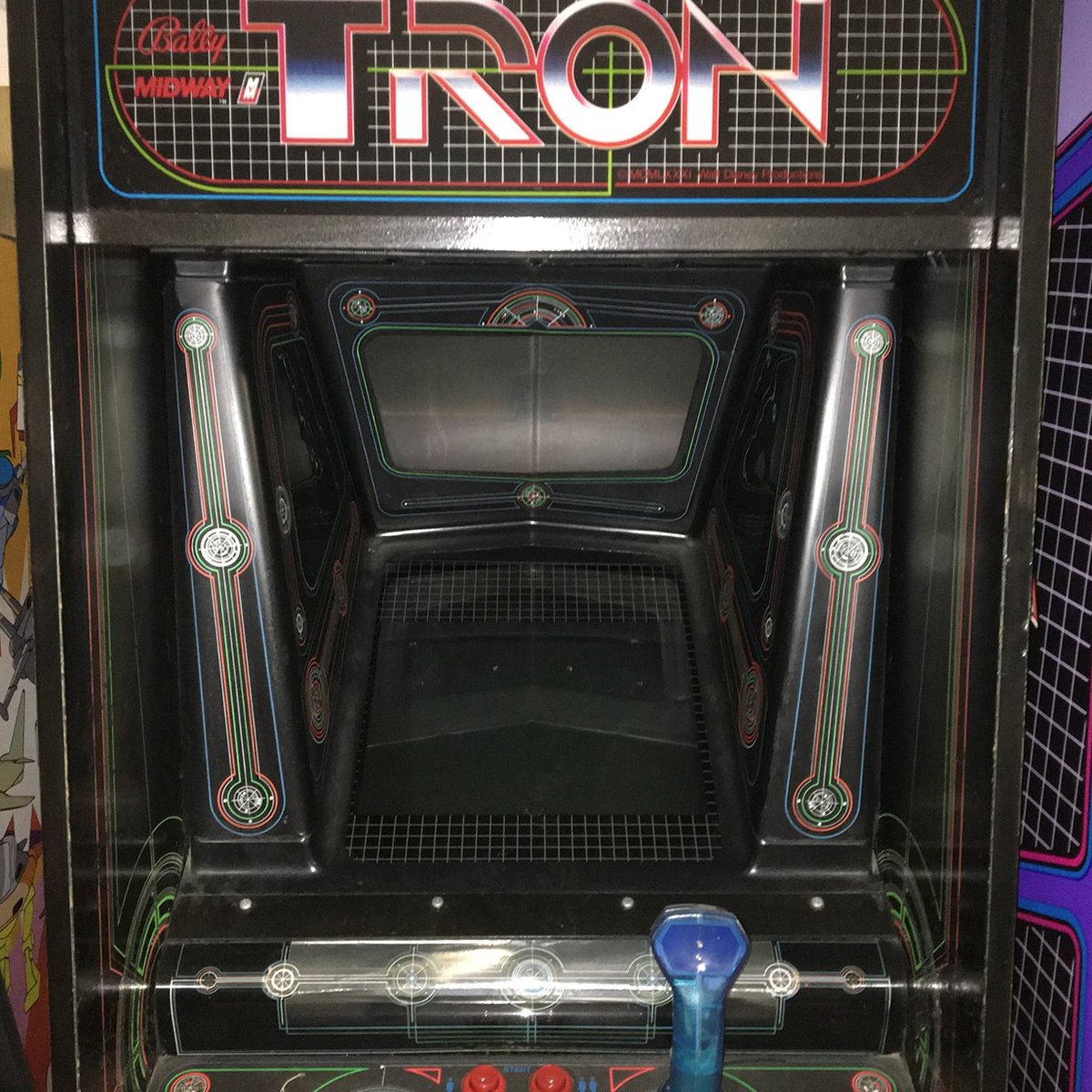
When we talk about Versions, Ports, and Related Tron Arcade Games, we have to start here. Released by Bally Midway in 1982, the Tron arcade game was the very first video game based on the movie. It didn't tell a sprawling story but instead invited players to survive four distinct mini-games, each inspired by iconic scenes from the film:
- I/O Tower: Navigate a maze, avoiding Sark's tanks.
- MCP Cone: Break through the Master Control Program's defenses.
- Light Cycles: The now-legendary game of trailing walls and trapping opponents.
- Battle Tanks: Control a tank in a grid, destroying enemy tanks.
This game defined the look and feel of Tron interactivity for a generation, becoming a benchmark for movie-to-game adaptations. It’s a foundational piece of the franchise, showcasing how digital environments could be translated into engaging challenges. To truly understand its impact and evolution, you really should Explore the Tron arcade game.
Discs of Tron: A Standalone Legacy
Originally intended as part of the Tron arcade game, Discs of Tron was eventually released as a standalone arcade cabinet in 1983. This game focused solely on the disc combat sequence, pitting Tron against Sark and other foes in a 3D arena. Its placement within the canon is intriguing; as mentioned earlier, it was later contextualized within the GBA Tron 2.0 game as an in-game arcade machine, offering a subtle nod to its historical significance. It evolved the evolution of Light Cycle gameplay by focusing on a different iconic Tron element: disc combat.
Mattel's Era: Deadly Discs, Maze-a-Tron, and Solar Sailer
Mattel Electronics produced a series of Tron-licensed games for its Intellivision and Atari 2600 consoles in the early 1980s. Due to the technological limitations of the era, these games were basic in their design, with no explicit narrative. They generally depicted events that could take place at any point before the first movie, showing Tron in various scenarios of survival.
- Tron: Deadly Discs (Intellivision, Atari 2600): Players controlled Tron in a arena, fighting off multiple disc-throwing enemies, echoing the disc combat of the film.
- Tron: Maze-a-Tron / Adventures of Tron (Intellivision): A platformer where Tron navigated mazes, avoiding enemies and collecting items.
- Tron: Solar Sailer (Intellivision): This game had Tron piloting a solar sailer through a grid-like area, avoiding energy drains and hostile programs.
These titles, while simple, were crucial in expanding the accessibility of the Tron universe to home console users, offering diverse ways to interact with its core concepts.
RUN/r & Space Paranoids: Modern Flavors and Hidden Gems
Even in modern times, Tron continues to inspire games with light narrative but heavy on gameplay.
- Tron: RUN/r (PC, PS4, Xbox One): Released in 2016, Tron: RUN/r is an endless runner game with a basic story overlay, presenting players with procedurally generated levels and high-speed action. It focuses on twitch reflexes and stylish movement within the Grid. While not deeply narrative-driven, it offers a distilled, adrenaline-fueled Tron experience that is readily available as a full purchase.
- Space Paranoids: This is Kevin Flynn's famous in-universe arcade game from the original film. While technically a canon game within the Tron universe, its real-world release was extremely limited. An arcade version was playable at SDCC 2009, an online Flash version appeared in 2010 as part of a promotional campaign, and it made an appearance at Disneyland. It never had a wide public release, making it a true collector's item and a fascinating piece of Tron meta-lore.
Out of Circuit: Unofficial, Crossover, and Peripheral Tron Experiences
Beyond the officially licensed and canonical titles, the Tron universe has permeated gaming culture in broader, sometimes unexpected ways. These experiences, while not typically part of the main Tron narrative canon, demonstrate the franchise's enduring impact and visual appeal.
Fan Creations and Homages: Armagetron & GLtron
The striking visual identity of Tron's Light Cycles has inspired countless fan-made games and open-source projects. Two prominent examples are:
- Armagetron (Armagetron Advanced): A popular open-source 3D Light Cycle game, evolving from the original GLtron. It meticulously recreates and expands upon the Light Cycle experience with online multiplayer, custom maps, and various gameplay modes. It’s a testament to the community's love for the core concept and provides an endless source of competitive fun.
- AdvancedGLtron: One of the precursors to Armagetron, this game laid the groundwork for many fan interpretations of the Light Cycle challenge, focusing on high-speed, competitive grid battles.
These games, though unlicensed, offer robust and often superior Light Cycle experiences, proving the longevity and adaptability of Tron's original gameplay ideas.
Handheld Simplicity: TomyTronic & TomyTutor Tron
In the early days of personal electronics, Tron's aesthetic also found its way into simpler, dedicated handheld games.
- TomyTronic Tron: This was a handheld electronic game from the 1980s, featuring LED or LCD graphics. It typically involved dodging obstacles or shooting enemies in a simplified grid environment, providing a portable Tron experience long before smartphones existed.
- TomyTutor Tron: Another early electronic game, similar in concept to the TomyTronic, offering basic interactive challenges.
These devices highlight how the appeal of Tron transcended sophisticated platforms, capturing imaginations even with rudimentary technology.
Tron in the Multiverse: Kingdom Hearts, Disney Infinity, Fortnite
Tron's unique visual style and themes have made it a prime candidate for crossovers into other popular game franchises, especially those under the Disney umbrella. While these appearances often incorporate Tron elements and even discuss its lore, they are generally not considered canon to the main Tron narrative. Instead, they represent alternate realities or temporary convergences.
- Kingdom Hearts: Sora and his companions visit Space Paranoids, a digital world based on the Tron universe, in Kingdom Hearts II and Kingdom Hearts 3D: Dream Drop Distance. Here, they interact with characters like Tron, Sark, and the MCP, engaging in light cycle races and disc battles. These segments often involve discussions about data, hearts, and the nature of digital existence, reinterpreting Tron's themes through the lens of Kingdom Hearts' overarching narrative.
- Disney Infinity: Tron characters like Sam Flynn and Quorra, along with Light Cycles and other elements, were available as playable figures and in-game content within the Disney Infinity sandbox game series. Players could create their own adventures using these assets, blending Tron with other Disney and Pixar franchises.
- Fortnite: More recently, Fortnite has featured Tron-themed skins, gliders, and emotes. These cosmetic items allow players to don the iconic neon suits and wield disc weapons in the popular battle royale game, bringing the Grid's style to a massive, global audience.
These crossovers serve as fantastic examples of how Tron's visual language and core concepts continue to resonate, finding new life and meaning in diverse gaming ecosystems. They don't necessarily advance the "official" Tron story, but they certainly keep the franchise relevant and visible to new generations of players, perhaps inspiring speculation about future Tron games.
Navigating the Grid: Understanding Tron Game Canonicity
The "CUPO at best" approach to Tron's game canon means that while there's no single, universally agreed-upon master timeline, there are general guidelines to consider. Story-driven games like Tron 2.0, Tron Evolution, Tron Identity, and Tron Catalyst are almost always intended to expand the universe's narrative, directly influencing the unfolding lore. They are the most likely candidates for "official" canon.
Games with light or no story, such as the original arcade game or the Mattel titles, exist more as ambient "events within the Tron world." They show us what life is like on the Grid – the challenges programs face, the games they play, the dangers they navigate – rather than advancing a specific plot. Their canonicity lies in portraying the essence of the Tron universe.
Crossovers, while fun and engaging, typically exist in their own narrative bubbles. They borrow Tron's aesthetics and characters but don't usually dictate the future of the core Tron saga. They offer fantastic "what-if" scenarios and broaden Tron's appeal but are best enjoyed as standalone experiences.
Beyond the Play: What Makes a Tron Game 'Canon' (or Not)?
For fans trying to piece together the Tron saga, understanding canonicity isn't about rigid rules, but about intent and impact.
How to approach Tron game lore:
- Prioritize Narrative-Heavy Titles: If a game explicitly sets out to tell a story or be a prequel/sequel to a film, it's generally safe to assume it's aiming for canonical status (e.g., Tron 2.0, Evolution, Identity, Catalyst). Pay close attention to these for new lore.
- Look for Direct Connections: Does the game feature established characters, locations, or directly reference events from the films? The stronger the direct link, the more likely its story elements are intended to be official.
- Consider the "Software Update" Model: Be prepared for new media (films, comics, or even future games) to potentially supersede or recontextualize older game narratives. This is an inherent part of Tron's digital identity.
- Embrace the Ambience: Games with light or no story, like the original arcade games or the Tron: Deadly Discs series, aren't less valuable. Instead, view them as snapshots of everyday life or common activities within the Grid. They enrich the world-building, even without a grand plot.
- Enjoy Crossovers for What They Are: Crossover appearances in games like Kingdom Hearts or Fortnite are fantastic celebrations of the Tron brand. Appreciate them for their creative integration and fun interpretations, but don't rely on them for core Tron universe progression.
- Recognize the the visual novel genre as a valid storytelling medium: The inclusion of games like Tron Identity highlights that the form of the game doesn't diminish its narrative weight. A compelling story can be told through any genre.
Ultimately, the most useful way to experience Tron's expansive game history is to enjoy each title for what it offers, understanding that the overall tapestry is rich, diverse, and constantly evolving – much like the digital Grid itself.
Your Journey into the Grid
The journey through Tron's video game history is a compelling one, reflecting the evolution of gaming itself alongside a beloved science fiction universe. From the stark, neon-lined battlegrounds of the arcade era to the expansive, story-driven worlds of modern consoles and the intricate narratives of visual novels, each game offers a unique byte of the Grid. Whether you're a veteran program seeking deeper lore, a newcomer eager to understand the saga, or simply someone who appreciates the thrill of a Light Cycle battle, there's a Tron game waiting for you. Dive in, explore the circuits, and remember: the Grid may be fluid, but its spirit of innovation and digital wonder remains constant.